

The Rutgers Budget
Explore the university's 2027 operating budget, including the sources of university funding, how those resources are used, and the year-round planning process that supports responsible financial stewardship.
Budget Overview
Rutgers, The State University of New Jersey, has developed a balanced fiscal year 2027 budget that prioritizes affordability and access for students while continuing to invest in the university's academic, research, healthcare, and public service missions. The budget reflects a commitment to long-term financial sustainability and the responsible stewardship of the public resources and tuition dollars entrusted to the university by taxpayers, students, and their families.
The fiscal year 2027 budget supports the people, programs, and services that define Rutgers' mission as New Jersey's flagship public university. Investments in education, research, healthcare, and public service help expand opportunities for students, advance discovery and innovation, and strengthen the communities Rutgers serves throughout the state and beyond.
Rutgers Fiscal Year
2027 Budget
The Rutgers Board of Governors adopted the fiscal year 2026-2027 budget in July 2026, providing a roadmap for the
university’s financial priorities and operations through June 30, 2027.
Source of Funds
Rutgers relies on a diversified revenue base. Tuition and fees represent the largest single source of funds, accounting for nearly 30% of university’s total funding.
Additional funds come from state support; competitive research grants and contracts; patient care services, including statewide clinical operations, specialty care, and behavioral health services; auxiliary operations, including housing, dining, and parking; gifts; endowments; and other revenues. This diversified revenue base provides financial strength while requiring active management across multiple areas. A large share of the university’s non-tuition revenue is restricted or contractually obligated to specific purposes and cannot be redirected to support general educational or operating expenses.

Detail of Sources
-
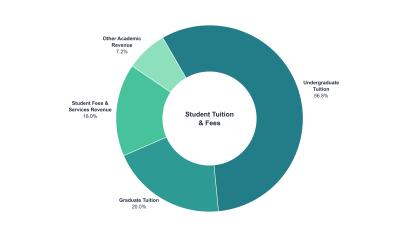
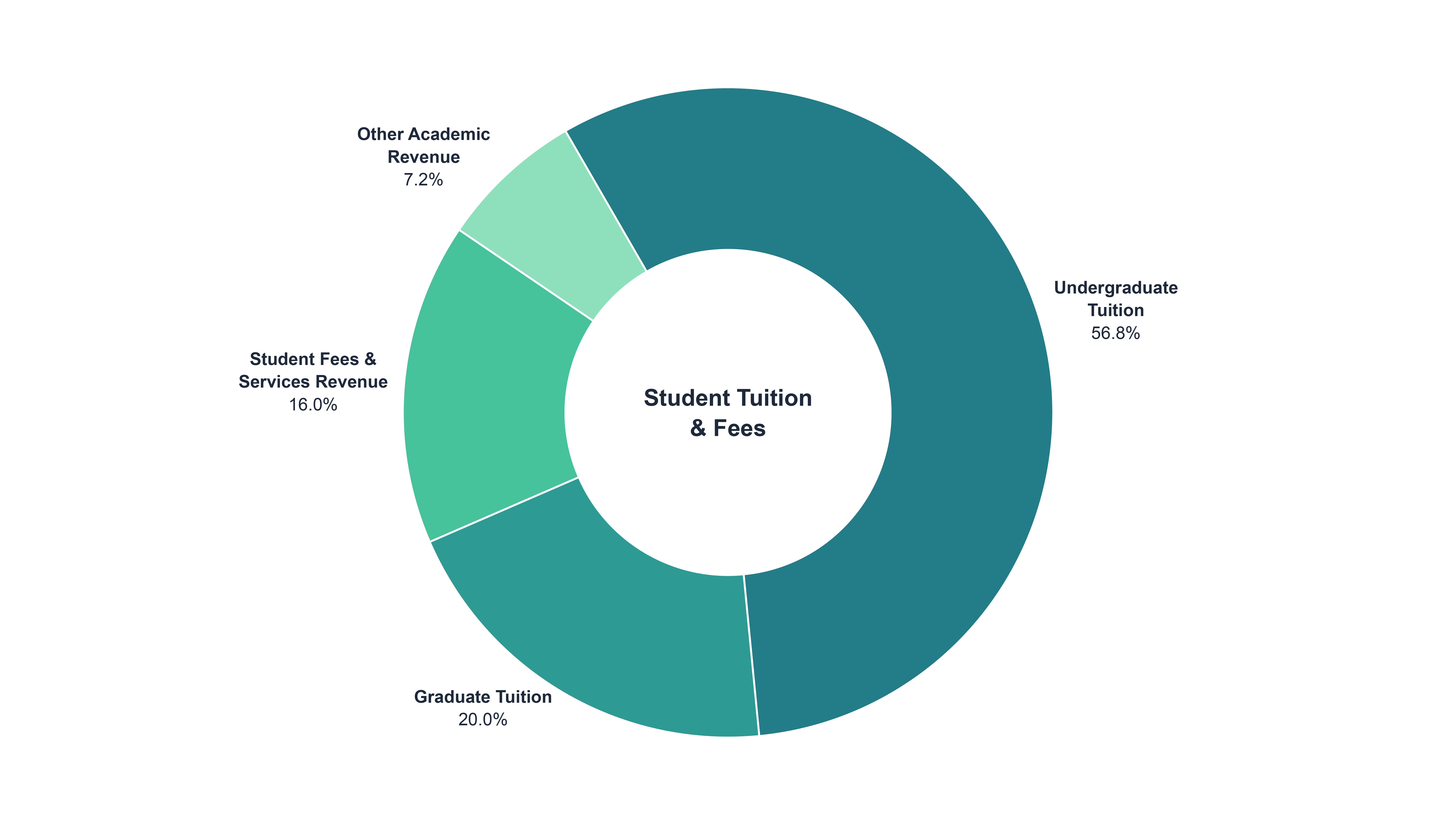
Student tuition and fees revenue sources include graduate and undergraduate tuition, student fees and services, and other academic revenue.
-
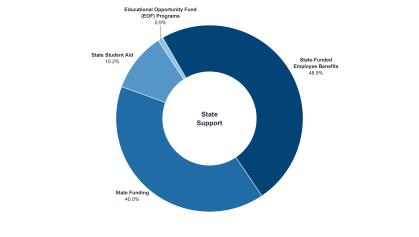
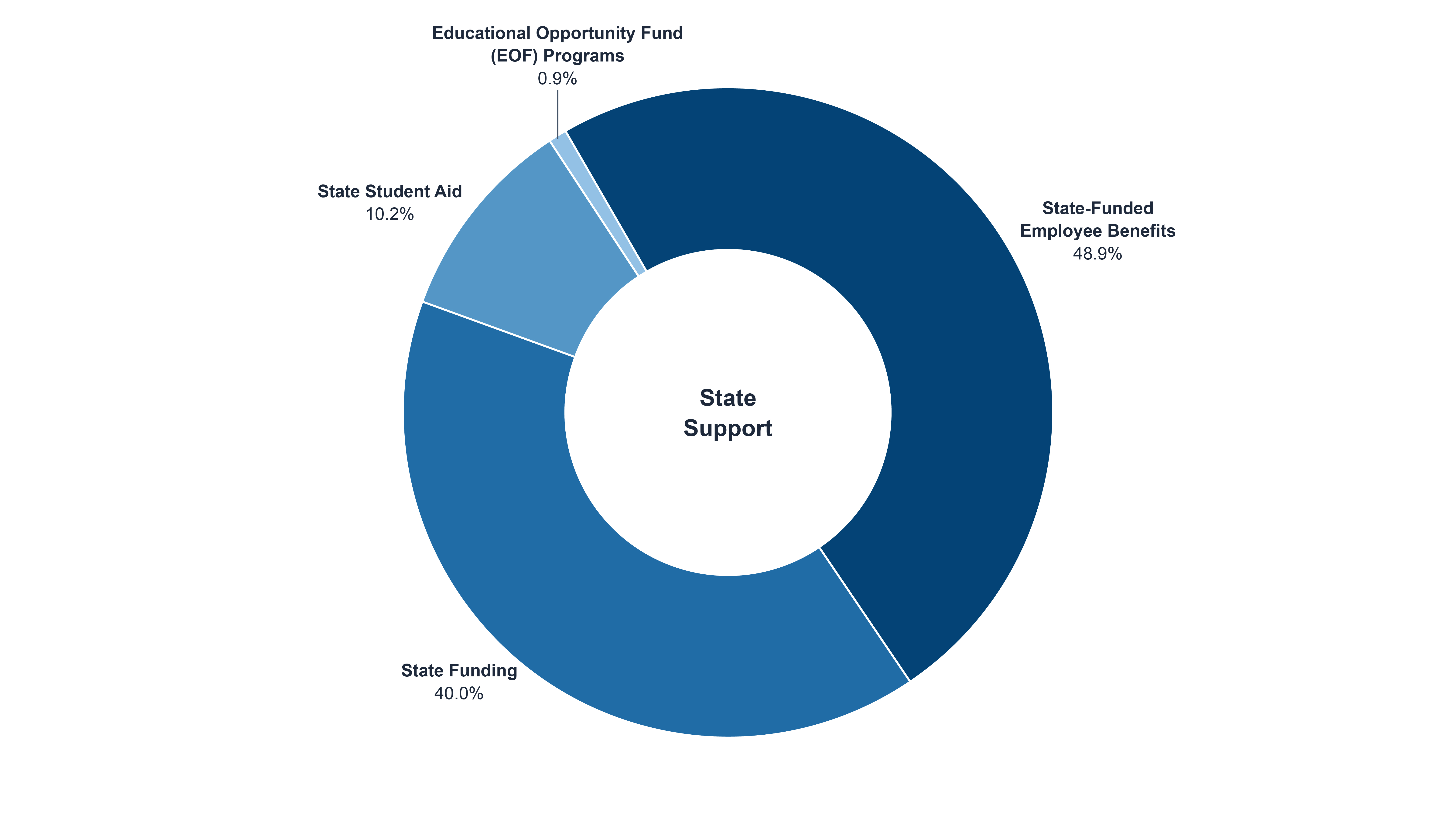
State support includes revenue from state appropriations, state-paid fringe benefits for certain employees, outcomes-based allocation aid, and state student aid programs (e.g., the Tuition Aid Grant and the Garden State Guarantee).
-
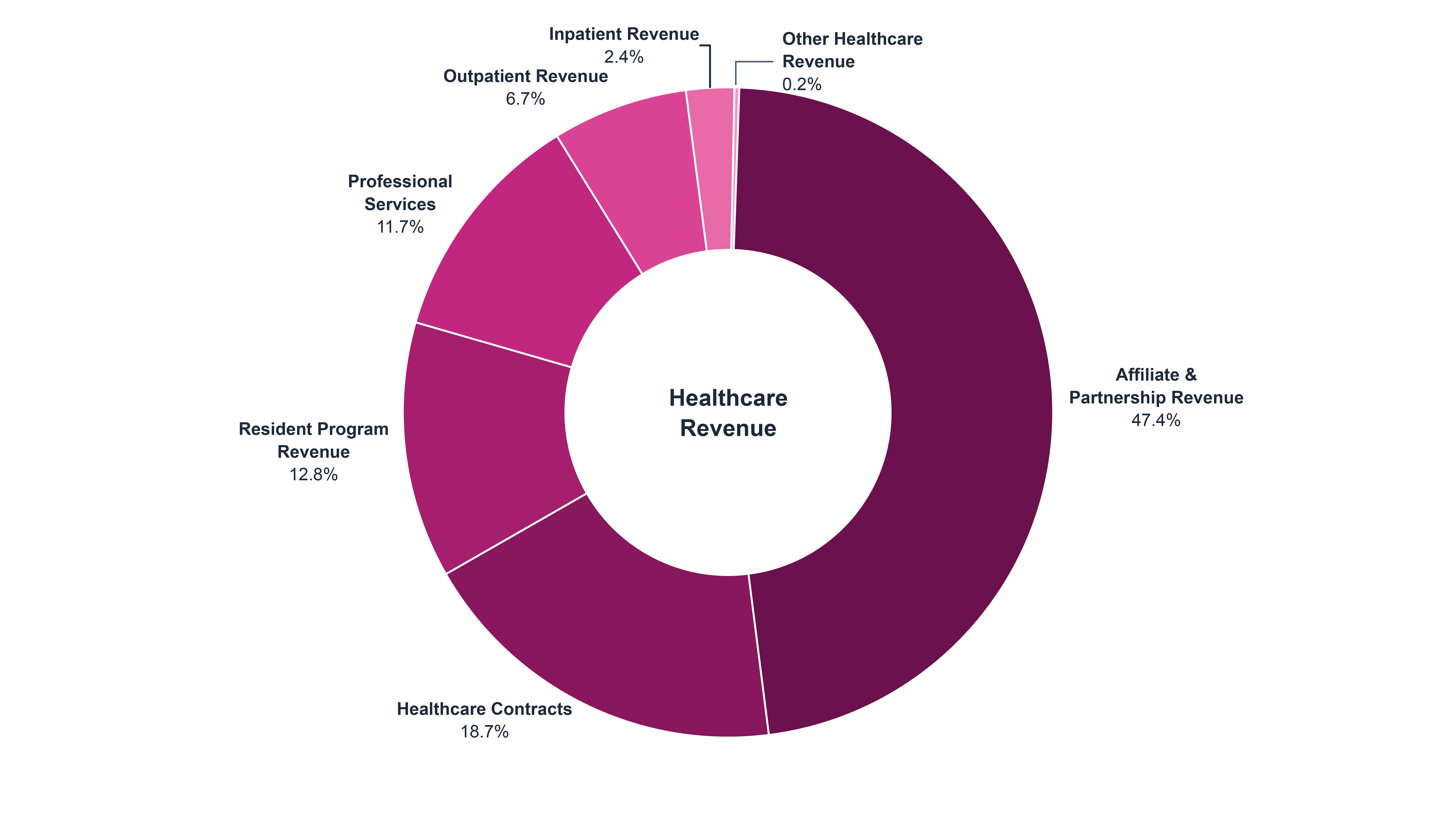
Healthcare revenue sources include inpatient and outpatient services, professional services, affiliated and resident programs, and healthcare contracts.

-
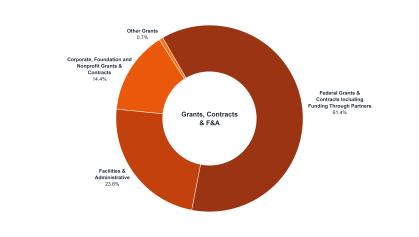
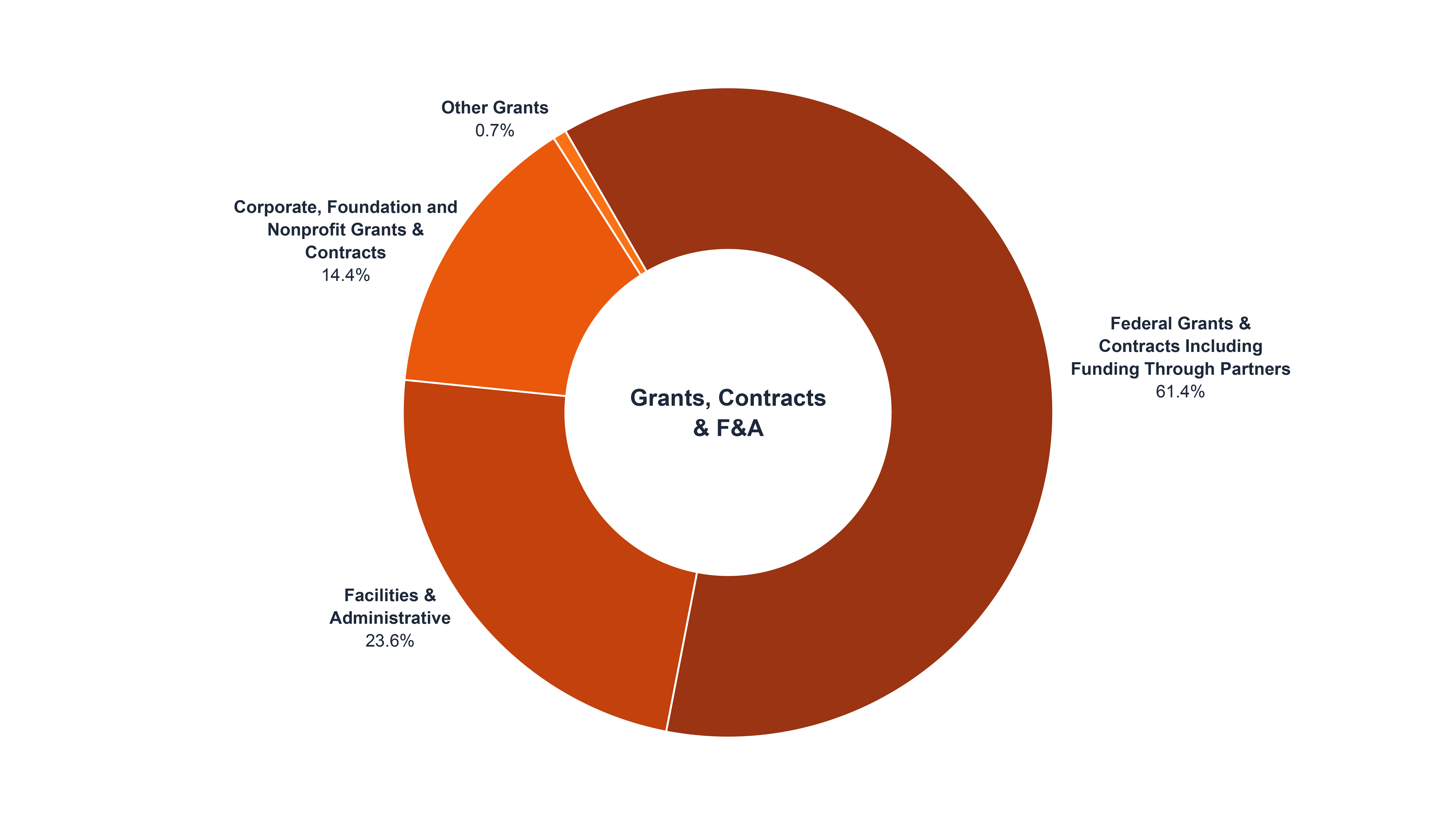
This category of funding includes grants and contracts from federal, state, corporate, foundation, and other sponsors that support research, instruction, public service, and other university activities. It also includes Facilities & Administrative (F&A) revenue that helps support the facilities, infrastructure, and administrative services necessary to conduct research and innovation at Rutgers.
-
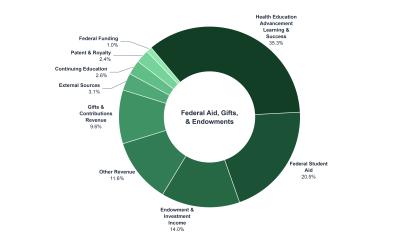
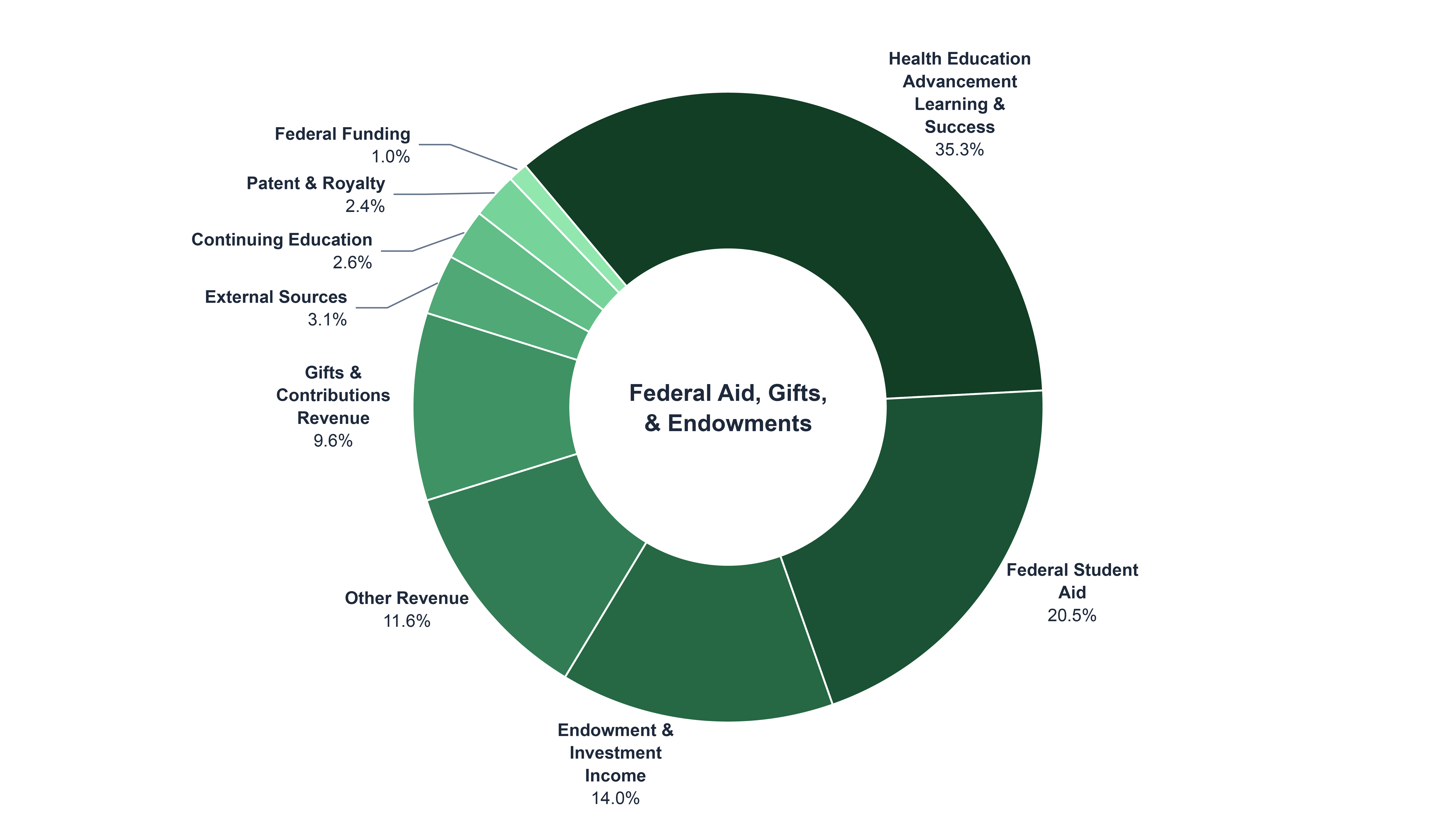
Included in this source are federal funding, student aid, gifts, endowments, investment income, and other sources.
-
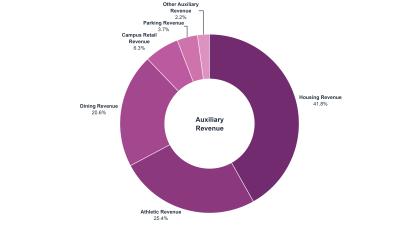
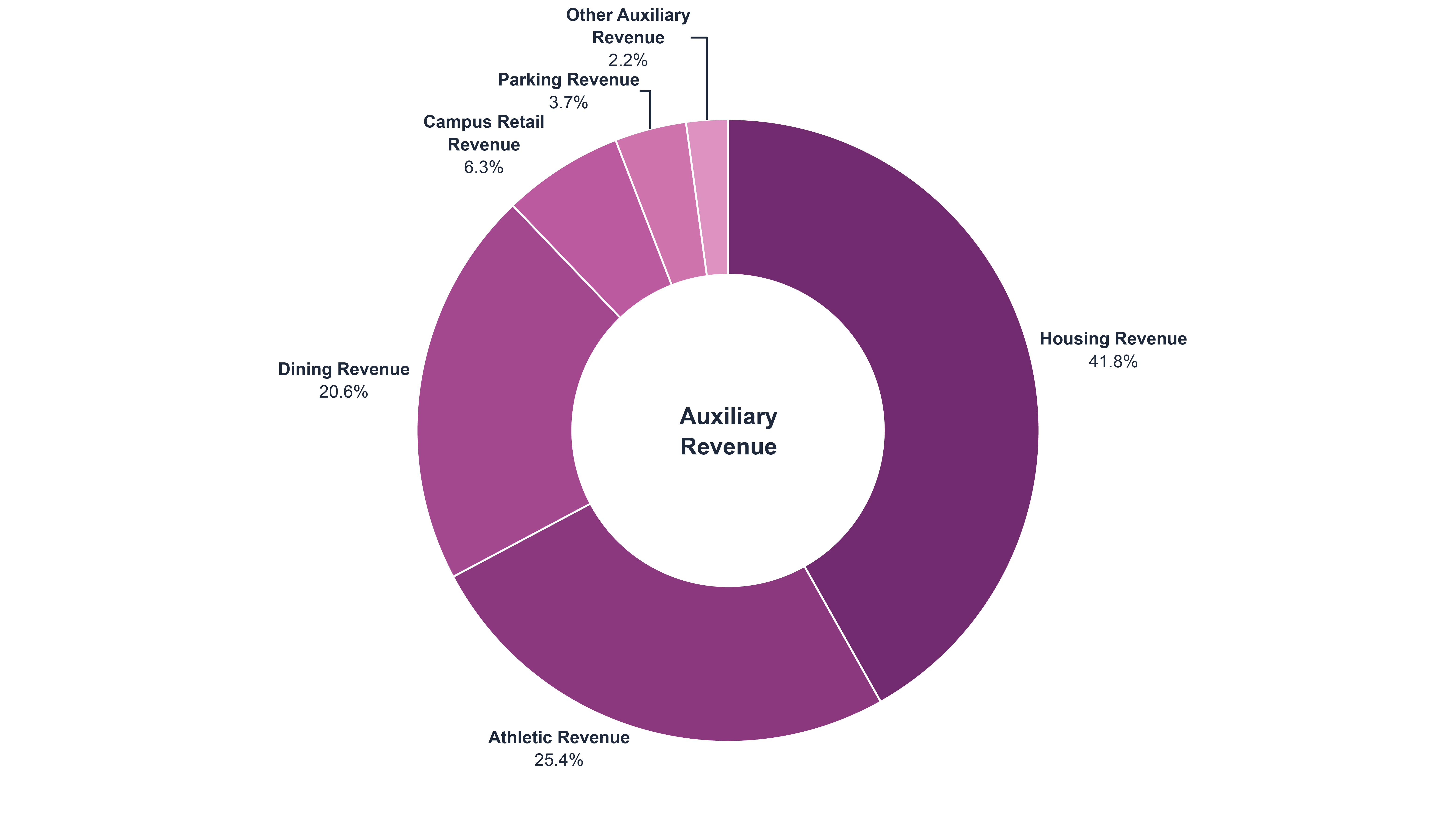
Auxiliary revenues include funding generated by self-supporting operations such as housing, dining, parking, transportation, athletics, and other campus services. These activities are primarily funded through the fees and revenues associated with the services they provide.
Uses of Funds
The majority of university expenditures directly support people and the core mission, including instruction and learning, academic support, healthcare, research, public service, student services, and financial aid across all campuses.
The budget also funds the essential administration and operations required to sustain the university, including facilities, utilities, technology, safety, compliance, and central administrative functions.
Auxiliary enterprises include self-supporting operations that provide services to students, faculty, staff, and visitors, such as housing, dining, parking, transportation, athletics, and other campus services. These activities are generally funded through the fees and revenues they generate rather than through tuition or state support.

Detail of Uses
-
Instruction encompasses the university's teaching, coursework, and academic activities. Academic support provides essential resources and services, such as libraries, technology, academic administration, curriculum, and faculty professional development.
-
Healthcare supports the prevention, treatment, and management of physical and mental health conditions through medical and health services. Public service extends the impact beyond the university, offering communities noncredit education, workshops, cooperative extension services, advisory work, and public broadcasting.
-
Administration and institutional support include central management and executive operations, such as leadership, legal and financial services, human resources, procurement, and alumni fundraising activities. Operations and plant maintenance support the care, upkeep, and safety of university grounds, buildings, and infrastructure, including custodial care, utilities, campus security, repairs, and space planning.
-
Scholarships include financial aid grants, tuition waivers, and stipends awarded to undergraduate and graduate students to help offset educational costs. Student services include non-academic administrative support, including admissions, financial aid, counseling, career services, student health, and campus activities.
-
Sponsored research encompasses formally organized projects and studies conducted by faculty, institutes, and research centers. This includes research funded internally or commissioned by external agencies.
-
Auxiliary enterprise includes self-supporting campus operations that provide goods and services to students, staff, and the public for a fee, such as campus bookstores, dining halls, housing, and parking facilities.
-
Athletics supports the 24 men’s and women’s varsity athletic programs competing at the NCAA Division 1 level.
Note: Percentages may not sum to 100% due to rounding.
___________________________________________
Budget Planning Process
The university's budget process is a year-round effort that aligns with the State of New Jersey's fiscal cycle and supports Rutgers' mission as the state's flagship public university. Developed through a collaborative process involving university leadership, schools, campuses, and administrative units, the budget helps ensure that resources are aligned with institutional priorities, support student success, and advance Rutgers' academic, research, healthcare, and public service missions.
Budget planning is an ongoing process that extends well beyond the adoption of the annual budget. Throughout the year, the university evaluates enrollment trends, state appropriations, research activity, workforce needs, and other key factors to inform planning and decision-making. Regular forecasting and financial review help Rutgers respond to new opportunities, support strategic investments, and responsibly steward the public and private resources entrusted to the university.
FY27 Budget Approach
The adopted FY27 budget reflects a deliberate shift from an expense-first process to a revenue-first approach. Units were asked to begin with realistic revenue expectations, evaluate existing commitments and priorities, and consider opportunities to maximize the impact of available resources. This approach strengthens the connection between resource planning, institutional priorities, and long-term financial sustainability.
The FY27 budget also places a greater emphasis on planning, forecasting, and shared accountability across the university. By focusing on informed decision-making and responsible stewardship, the budget supports investments that advance student success, academic excellence, research and innovation, healthcare, and public service. The result is a budget that not only supports current operations but also helps position Rutgers to continue delivering value to students, families, taxpayers, patients, and the communities it serves.
Budget Model
Rutgers currently operates under a Responsibility Center Management (RCM) budget model, which helps guide how financial resources are allocated across the university. After nearly a decade under the current framework, Rutgers is undertaking a comprehensive review of the model to evaluate how effectively it supports the university's mission, strategic priorities, and long-term financial sustainability.
As part of this effort, the university conducted a broad-based assessment in late spring of 2026 that gathered input from faculty, staff, academic leaders, and administrative leaders across Rutgers. The review examined areas such as transparency, governance, understanding of the model, and overall effectiveness. The findings will help inform opportunities to strengthen communication, enhance decision-making, and ensure that the budget model continues to support academic excellence, research, healthcare, public service, and student success.
Additional information about this ongoing work will be shared as the review progresses throughout 2026 and 2027.
UFA Financial Archives
Access and review current and prior year financial documents, including fiscal budgets, resolutions, and reports.